Welcome to the news section!
Here you will find all the news related to ATRIL and the translation market.
Computer for a translator: a desktop or a laptop?
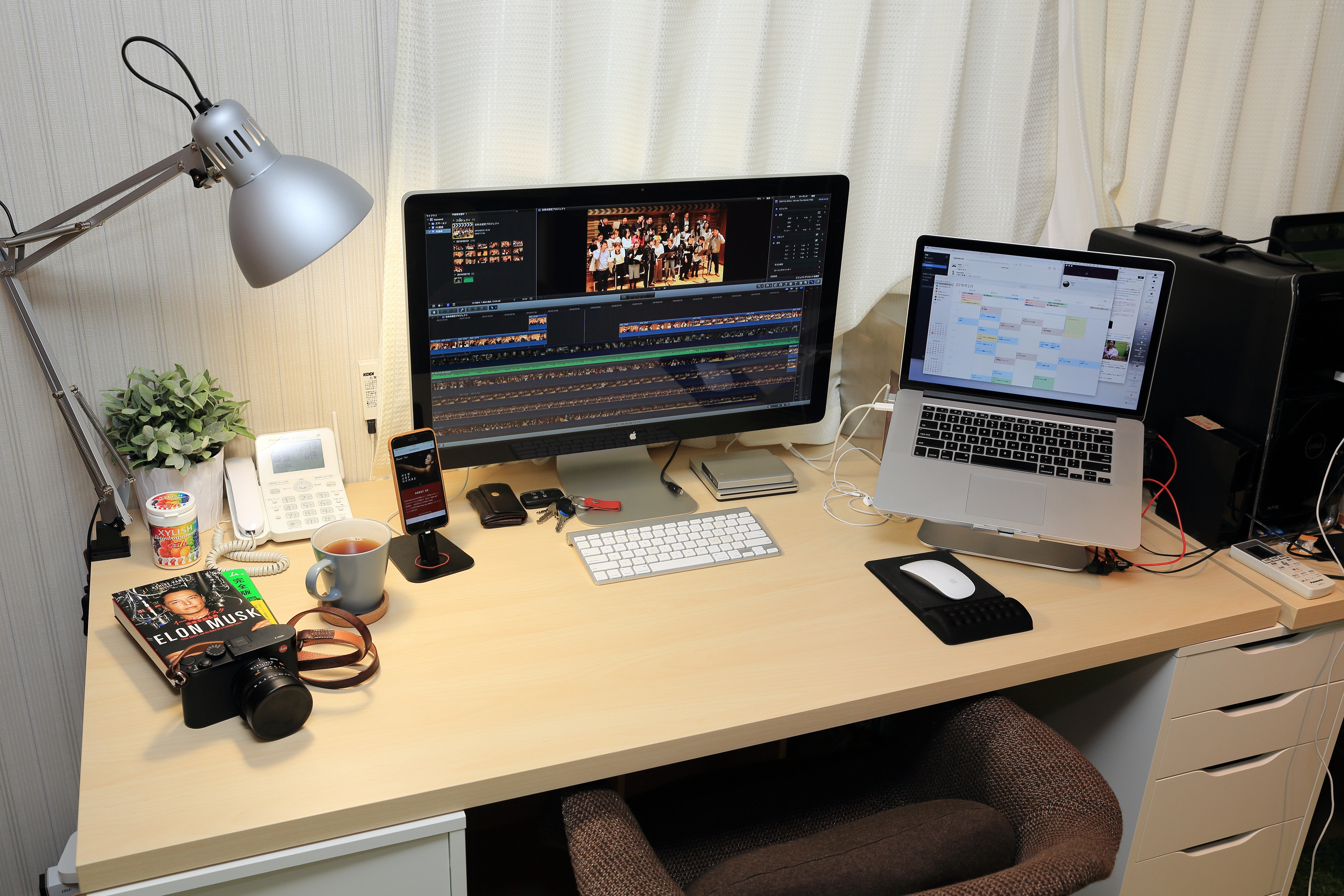
When choosing a new computer, you are often faced with a dilemma: a desktop or a laptop? You can’t just answer this question with a simple “yes” or “no”. It all depends on your style of work or the overall time you spend in front of a screen. And there is a number of factors you need to take into account.
Portability
If you travel a lot on a regular basis, then choosing a laptop would be an obvious choice for you. The most modern models are usually very thin and quite lightweight, which makes it especially easy to carry them around. In this respect, stationary computers can’t even compare to laptops or notebooks! PCs users need to resort to other measures if they need to take their work with them, such as flash drives or cloud storage.
Work comfort and ergonomics
When comparing PCs with laptops, ergonomics is one of the key aspects you just have to take into account. Especially when the device will be primarily used for work. And with translation work, we’re taking really long hours. Bear in mind, that going for option that is not too comfortable can take a heavy toll on you in the long run.
It goes without saying that a stationary computer offers you more in terms of ergonomics. With PCs it’s much easier to position the screen correctly so that it doesn’t strain your eyes or neck. The same goes with adjusting keyboards to suit your preferences. Experts advise to place the keyboard in such a way to keep the elbows to your side. It should be positioned about 2 inches above your thighs, so that your arms are tilted downwards. With adjustable keyboard trays it’s not difficult to achieve. There are also many keyboard models to choose from to begin with.
Laptops are more of a one-size-fits-all option here, with much less variation. In most cases, the screen is too low and the keyboard is too high, which may cause neck or wrist pain.
Price and affordability
If you compare desktops with laptops of similar specs, PCs will usually turn out to be more affordable. PCs generally come with much more powerful processors than laptops. If you need to perform a few different power-intensive tasks at the same time, laptops may be considerably less effective and perform more poorly. With stationary computers it is also cheaper to upgrade certain components, like RAM memory or CPU. Laptop owners, on the other hand, often need to buy a new model, or they are forced to get stuck with a computer that is underperforming. This, in turn, may negatively influence your productivity.
Power issues
There can hardly be anything worse than losing all your translation work following a power outage! Laptops undoubtedly win in this category. Even in case of interruption of power supply, the battery backup allows you to save your work or even keep on working for a while. Desktop users, on the other hand, are much more vulnerable in when need to invest in external devices such as UPS (Uninterruptible Power Supply) to guard against such emergencies.
If you’re constantly on the move, working from home, your office, a train or a café, then a laptop will be a clear choice for you. However, a desktop computer always provides more comfort, and more options when it comes to accessorizing or upgrading. Before making a final decision you need to carefully consider your style of work and your individual preferences. Or – if you don’t have to care about your budget so much – buy both. Having both a desktop and a laptop at your disposal, you’ll be prepared for different circumstances. And you wouldn’t have to worry about losing access to your Déja Vu when alternating between PC and a laptop. You can easily move your license back and forth, depending on where you currently need it.
Gift ideas for translators to try this Christmas
Looking for some perfect last-minute Christmas gift ideas for translators? Gift-hunting when pressed for time may not be easy, but perhaps the following list will be of help.
Enjoy!

USB gadgets
USB gadgets are always a cool option for those spending a lot of time in front of computer screens. The choice is staggering: from USB HUBs, powerbanks, mug heaters, lamps, a fan or an additional speaker. Many translators stay up until late at night, so a USB-powered foot heater would be a thoughtful and useful gift as well. Such devices can be connected to a computer as a power source. You can enjoy them during the never-ending sessions.
A mug
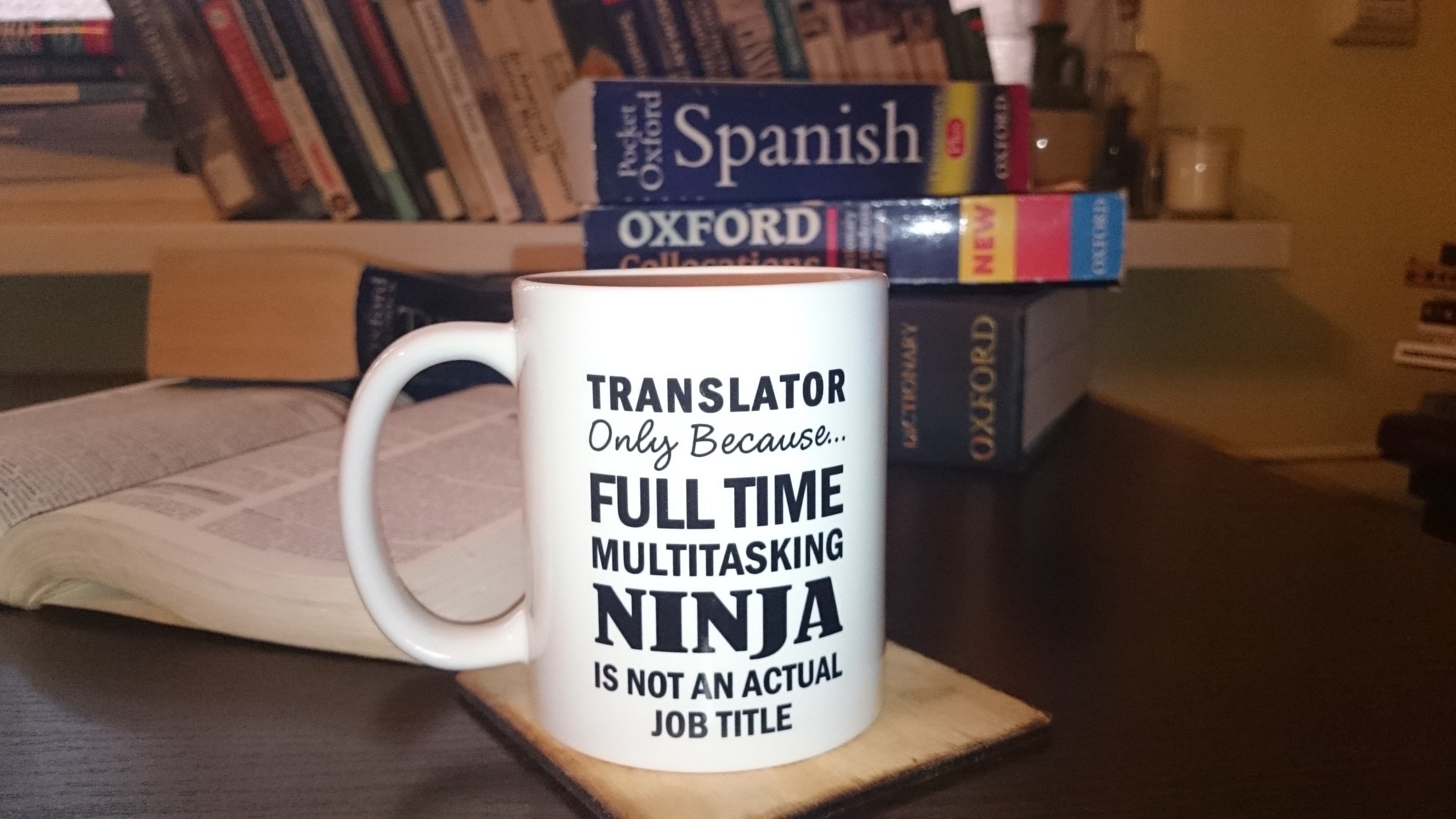
This one never gets old. Why? Most translators are powered by coffee, so it’s a very practical and useful gift. And if you manage to find one with a translation-related message, it will surely warm the heart of every translator. For those constantly on the move, a nice thermal mug would be a great idea.
An ergonomic chair
When asked, people who spend most of their time in front of a computer screen, usually complain of back pain. A great way to reduce it, is to opt for an appropriate ergonomic chair with good lumbar and neck support. It is worth paying attention to whether it has adjustable armrests too. True, it’s definitely not a cheap option, but if you have money to spare, every translator will appreciate it!
A massage session
Do you know anybody who would say ‘no’ to a nice back massage? Right! It will be especially appreciated by those who lead sedentary lifestyle or whose job requires sitting at a desk a lot. It can bring a great relief when experiencing back pain, muscle tension and it’s a perfect treatment for reducing stress. Other than that, it is highly enjoyable experience that positively increases the feeling of comfort.
An organizer/a planner

Translation job comes with many challenges, and keeping deadlines can be one of them. Juggling between clients and projects may sometimes seems like a tall order. That’s why a good organizer is every translator’s best friend. It surely makes it easier to be on top of everything, but it can also help maintain a good work-life balance.
A good dictionary
Despite technological progress and the vast availability of online glossaries, sometimes a reliable dictionary can be a powerful resource. It is especially true of specialist dictionaries, like a thesaurus, a dictionary of collocations or the ones dedicated to a narrow field of knowledge. Every translator is a language lover at heart, so a good dictionary is a safe, yet a foolproof gift idea that every translator will be happy to get.
A CAT tool license
This list would not be complete without mentioning one of the best possible gift ideas for translators: a Computer-Assisted Translation software. In today’s world it is more and more difficult to stay competitive on the market, if you’re not using the latest technology. When looking for a CAT software, it is important to choose one that is compatible with other tools, so that you can successfully cooperate with various translation agencies. That’s why Déja Vu X3 is a great option, as it supports multiple formats.
Thanks to advanced features such as Deep Miner, it also offers a productivity gain of 15% when compared to competitive tools available on the market. Therefore, by giving a translator the DVX3 license you’re not just giving them a great tool, you’re giving them free time too!
Debunking common myths about CAT tools
There are numerous myths and misconceptions about CAT tools. Let’s deal with the most persistent ones once and for all!
CAT tool myth #1: Computer-aided translation and machine translation is the same thing.
This is a common misconception held by those, who know little, if anything, about translation. But in fact, it couldn’t be further from the truth. For the vast majority of CAT tools, machine translation is only an additional feature. Machine translation engines provide automatic translation that is fast and cheap, but often highly innacurate. CAT tools, on the other hand, still require an actual knowledgeable human to do the job. This means they are much more reliable when it comes to accuracy, consistency and grammatical correctness. CAT tools rely on translation memory and are a self-learning software that suggest possible translations for those segments that were previously translated.
CAT tool myth #2: They are complicated to use and the learning curve is steep
You don’t need to be computer savvy to benefit from most of the CAT tools features. Most if them also come with trial versions, which makes it easier for users to check out their user-friendliness. Atril’s trial version of Déja Vu X3 is a fully-functional 30-day demo, thanks to which CAT tool newbies can easily explore all of the feature free of charge. Users can also refer to a wealth of resources, including articles, videos and tutorials describing the features in details.
CAT tool myth #3: CAT tools are for translation agencies
While it is true that many translation agencies make their translators use a certain CAT tool, there isn’t a reason why self-employed freelancers couldn’t use them as well. They too will benefit from the increased translation speed, consistency of terms and stylistic uniformity. Atril’s Déja Vu was created by a translator with fellow translators in mind, and is a good choice for freelancers because of its user-friendly and intuitive interface.
CAT tool myth #4: They are ridiculously expensive and it will take ages before they pay for themselves!
One of the biggest advantages of CAT tools is the fact that they smoothen the workflow and positively increase productivity. If you have all your termbases in one place and don’t need to check on the terminology each time, it really saves time, which you can then spend on looking for and completing more projects. Features such as quality assurance or distraction-free interface are also difficult to underrate when it comes to boosting productivity.
But what about translation students only entering the market? Isn’t the expensive software a bit out of their reach?
The need to shell out a few hundreds of dollars may indeed eat into the savings of a student. Luckily, there is a way around it. Students can expect special discounts and take part in university training programs. Atril’s Academic Partnership program makes it possible for students to thoroughly explore the software and test its possibilities for free. And there’s more – the students and lecturers are offered preferencial prices once they decide to purchase DVX3 for personal use.
CAT tool myth #5: A good translator doesn’t need a CAT tools – it’s an easy option for beginners
Would you say that an accountant using an Excel spreadsheet to facilitate their work is going on the easy way? Probably not. Just like graphic designers, photographs or other specialists need appropriate tools to improve their work, translators too should look for solutions that help achieve better performance. When translating a terminology-dense texts, CAT tools make it easier to keep them consistent and coherent, which contributes to your imagine of a serious, professional translator, not the other way round.
Using CAT tools in your daily work will not only emphasize your professionalism but also make cooperation with translation agencies easier. It often happens that the whole translation memory or glossary files are handed over to translators. If you don’t have appropriate software, it might exclude you from the possibility of establishing such cooperation.